
Electrical Engineering
The Department of Electrical Engineering of LCIT, Bilaspur, is one of the finest and well-equipped electrical departments of the central region. The Department of Electrical Engineering was established in the year 2008 with an objective to develop professionals through quality education with an intake of 60 students. The faculty provides continuous inputs and designs the curriculum in the diverse area of Electrical Engineering. This input helps the department offer continuous value-added programs that are beyond the regular institute curriculum and are future-ready. The Department offering industrial research experience to our student that augments, their practical and technical skills is among the best Engineering Colleges in Bilaspur. Under the strong leadership and strong faculty team, the Department offers B. Tech. Degree in Electrical Engineering. The Staff Advisors identify slow learners and give them special training to enable them to cope with their peers in the respective class. The meritorious students are given special training in current research areas. Our pass-out students qualified for many on and off-campus interviews and is now working in reputed companies. Every year we conduct seminars, workshops, etc in the field of Electrical Engineering.
Electrical Engineering is one of the largest and fastest-growing fields, which generally deals with the study and application of Electricity. The Department has good infrastructural facilities and is equipped with full-fledged laboratories such as Basic Electrical Lab, Electrical Machines Lab- I and II, Power Electronics Lab, Electrical Measurements Lab, Advanced Electrical Engineering Lab and Electrical Workshop. The department also has audio-visual facilities with LCD and OHP for effective teaching. As a part of the curriculum, Industrial Visits are arranged for the students. The Department is a mix of industrial and academic expertise with highly qualified and experienced Faculty Members. Our main aim is to impart knowledge and innovative ideas to the students in the teaching-learning process. In the teaching-learning process, the students are given assignments and are made to work out exercise problems to equip themselves for the examination.
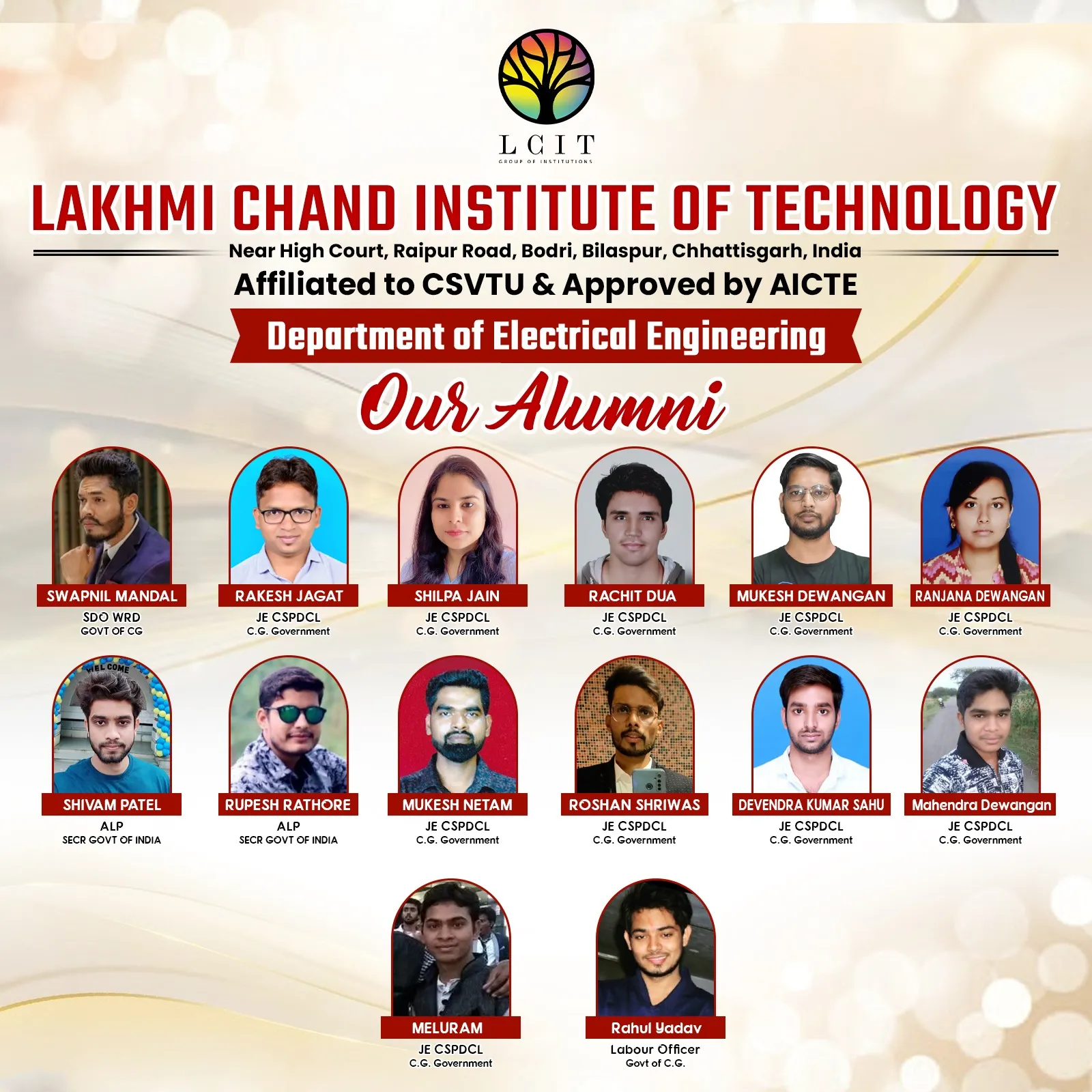
The Staff Advisors identify slow learners and give them special training to enable them to cope with their peers in the respective class. The meritorious students are given special training in current research areas. Our pass-out students qualified for many on and off-campus interviews and is now working in reputed companies. Every year we conduct seminars, workshops, etc in the field of Electrical Engineering.
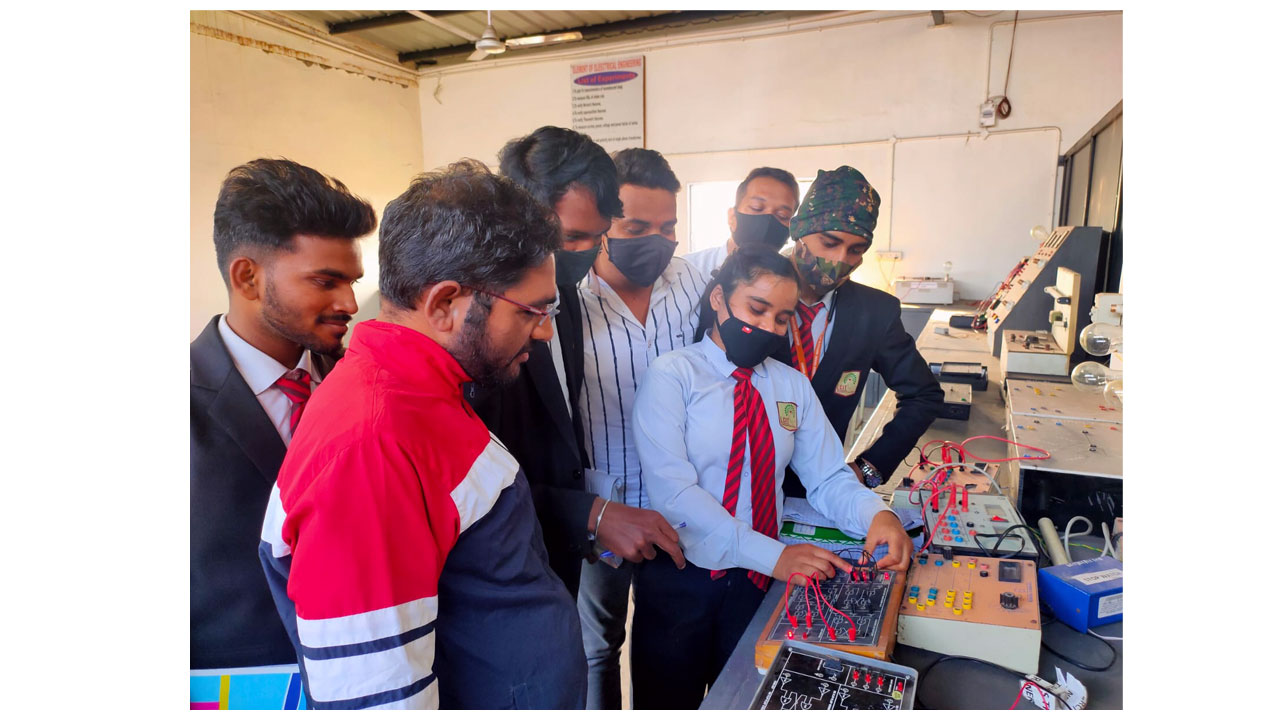
Teaching Pedagogy
The pedagogy in electrical engineering integrates theoretical foundations, hands-on practical learning, and industry-oriented exposure to prepare students for modern engineering challenges.
| Faculty Name | Qualification | Designation | Experience (Years) |
|---|---|---|---|
| Dr. Deependra Rathore | Phd , M.Tech | HOD | 21 |
| Mr. Gaurav Jaiswal | M.Tech, BE | Asst. Professor | 17 |
| Ms. Shweta Yadav | M.Tech, BE | Asst. Professor | 15 |
| Mr. Prashant Singh Rajpoot | M.Tech, BE | Asst. Professor | 14 |
| Mr. Nirmal Panigrahi | M.Tech, BE | Asst. Professor | 10 |
| Mrs. Swati Suryawanshi | MBA, BE | Asst. Professor | 5 |
| Mrs. Neha Vaishnav | B.Tech | Lecturer | 1 |
| Course | Eligibility | Seats | Duration | Department |
|---|---|---|---|---|
| Electrical Engineering | 12th marks: For Gen - 45% (PCM), For category - 40% (PCM), PET/JEE | 60 | 4 years | Electrical Engineering |
To be a center of excellence in Electrical Engineering education and research, fostering innovation, sustainability, and technological advancements for societal development.


.webp)
.webp)
.webp)
.webp)
.webp)
.webp)
.webp)
.webp)
.webp)
.webp)
.webp)
.webp)
.webp)
.webp)
| Paper Title | Author Name | Publication Year | Department |
|---|---|---|---|
| LOSS REDUCTION THROUGH SMART GRID IN INDIAN POWER SYSTEM | Ms. Shweta Yadav | 2016 | Electrical Engineering |
| MULTI-AREA INTERCONNECTED THERMAL SYSTEM AUTOMATIC GENERATION CONTROL BASED ON ANT LION OPTIMIZATION | Ms. Shweta Yadav | 2020 | Electrical Engineering |
| OVER HEAT PROTECTION OF INDUCTION MOTOR | Ms. Shweta Yadav | 2020 | Electrical Engineering |
| ANT LION OPTIMIZATION BASED CONTROLLER TUNING FOR AUTOMATIC GENERATION CONTROL OF MULTI-AREA INTERCONNECTED THERMAL SYSTEM | Ms. Shweta Yadav | 2018 | Electrical Engineering |
| DEPICTION AND EXCERTION OF POWER LOAD STABILIZATION ADOPTING FUZZY LOGIC | Mr. Nirmal Panigrahi | 2017 | Electrical Engineering |
| MODELING AND DESIGN OF SMART CARD PREPAYMENT SYSTEM FOR EFFICIENT ULTILISATION OF ELECTRICAL ENERGY IN DISTRIBUTION SYSTEM | Mr. Nirmal Panigrahi | 2016 | Electrical Engineering |
| PSO APPROACH FOR REACTIVE POWER OPTIMIZATION | Mr. Prashant Singh Rajpoot | 2017 | Electrical Engineering |
| REVIEW AND UTILITY OF FACTS CONTROLLER FOR TRACTION SYSTEM | Mr. Prashant Singh Rajpoot | 2014 | Electrical Engineering |
| ELECTRICITY PILFERAGE, FAULT DETECTION AND THEIR ISOLATION OF POWER QUALITY ENHANCEMENT IN ELECTRICAL DISTRIBUTION SYSTRM IN ESPOUSE SDS WITH SMART | Mr. Prashant Singh Rajpoot | 2020 | Electrical Engineering |
| DESIGN AND SIMULATION OF NEURO FUZZY CONTROLLER OF SEARATELY EXCITED DC MOTOR | Mr. Prashant Singh Rajpoot | 2016 | Electrical Engineering |
| A DYNAMIC - SUGPDS MODEL FOR FAULT DETECTION AND ISOLATION OF UNDERGROUND POWER CABLE BASED ON DETECTION AND ISOLATION ALGORITHM AND SMART | Mr. Prashant Singh Rajpoot | 2021 | Electrical Engineering |
| DEPICTION AND EXERTION OF POWER LOAD STABILIZING ADOPTING FUZZY LOGIC | Mr. Gaurav Kumar Jaiswal | 2016 | Electrical Engineering |
| POSSIBILITIES OF USING NEURAL NETWORK FOR ECG CLASSIFICATION | Mr. Gaurav Kumar Jaiswal | 2015 | Electrical Engineering |
| ECG CLASSIFICATION WITH THE HELP OF NEURAL NETWORK | Mr. Gaurav Kumar Jaiswal | 2014 | Electrical Engineering |
| ARTIFICIAL NEURAL NETWORK FOR ECG CLASSIFICATION | Mr. Gaurav Kumar Jaiswal | 2014 | Electrical Engineering |
| INDIAN POWER SYSTEM | Mr. Deependra Rathore | 2015 | Electrical Engineering |
| MULTI-AREA INTERCONNECTED THERMAL SYSTEM AUTOMATIC GENERATION CONTROL BASED ON ANT LION OPTIMIZATION | Mr. Deependra Rathore | 2020 | Electrical Engineering |
| LOSS REDUCTION USING DRS IN SMART GRID TECHNOLOGY | Mr. Deependra Rathore | 2014 | Electrical Engineering |
| POWER SYSTEM STABILITY ENHANCEMENT USING SMART GRID TECHNOLOGY THROUGH DRS | Mr. Deependra Rathore | 2014 | Electrical Engineering |
| S. No. | Name of Topper | Year |
|---|---|---|
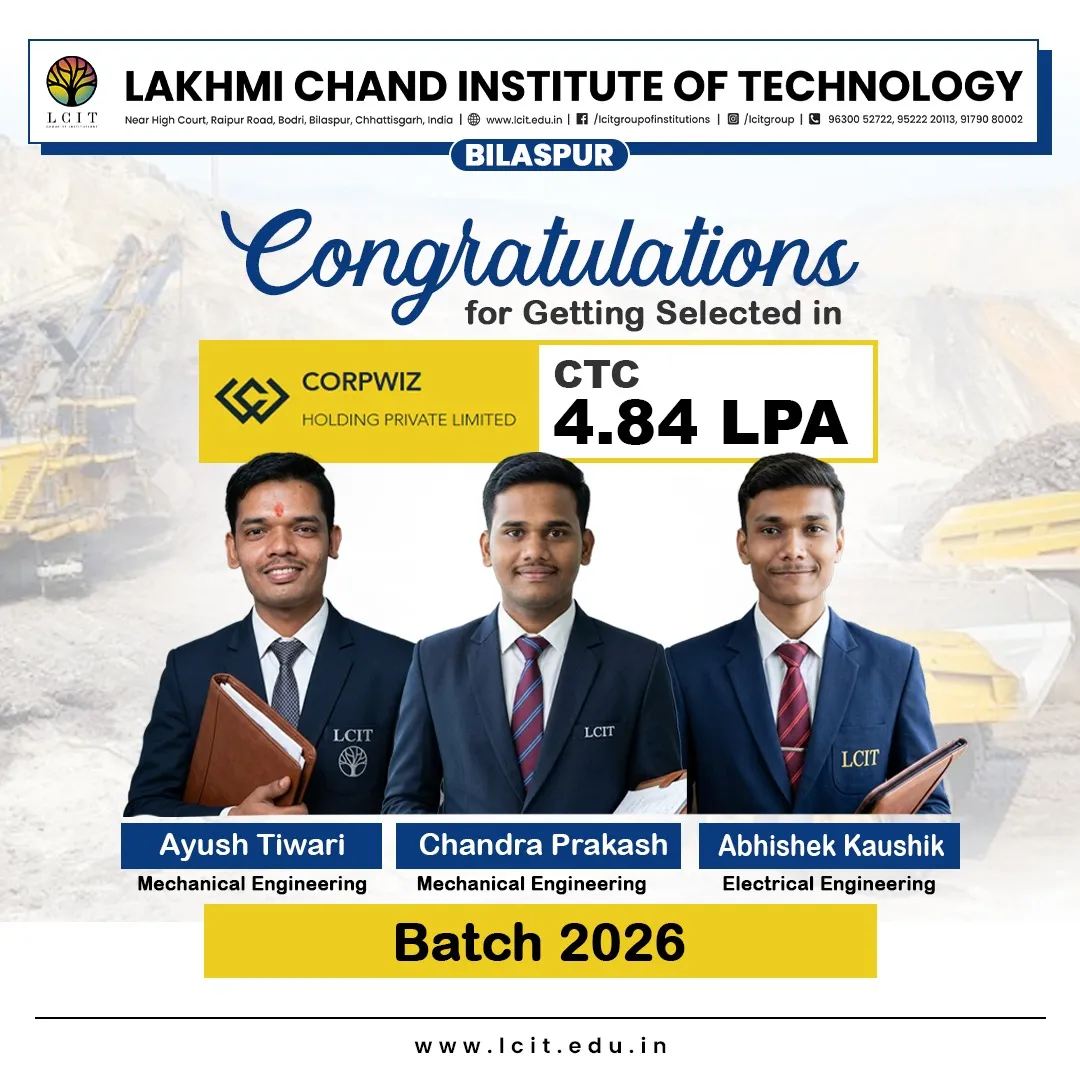
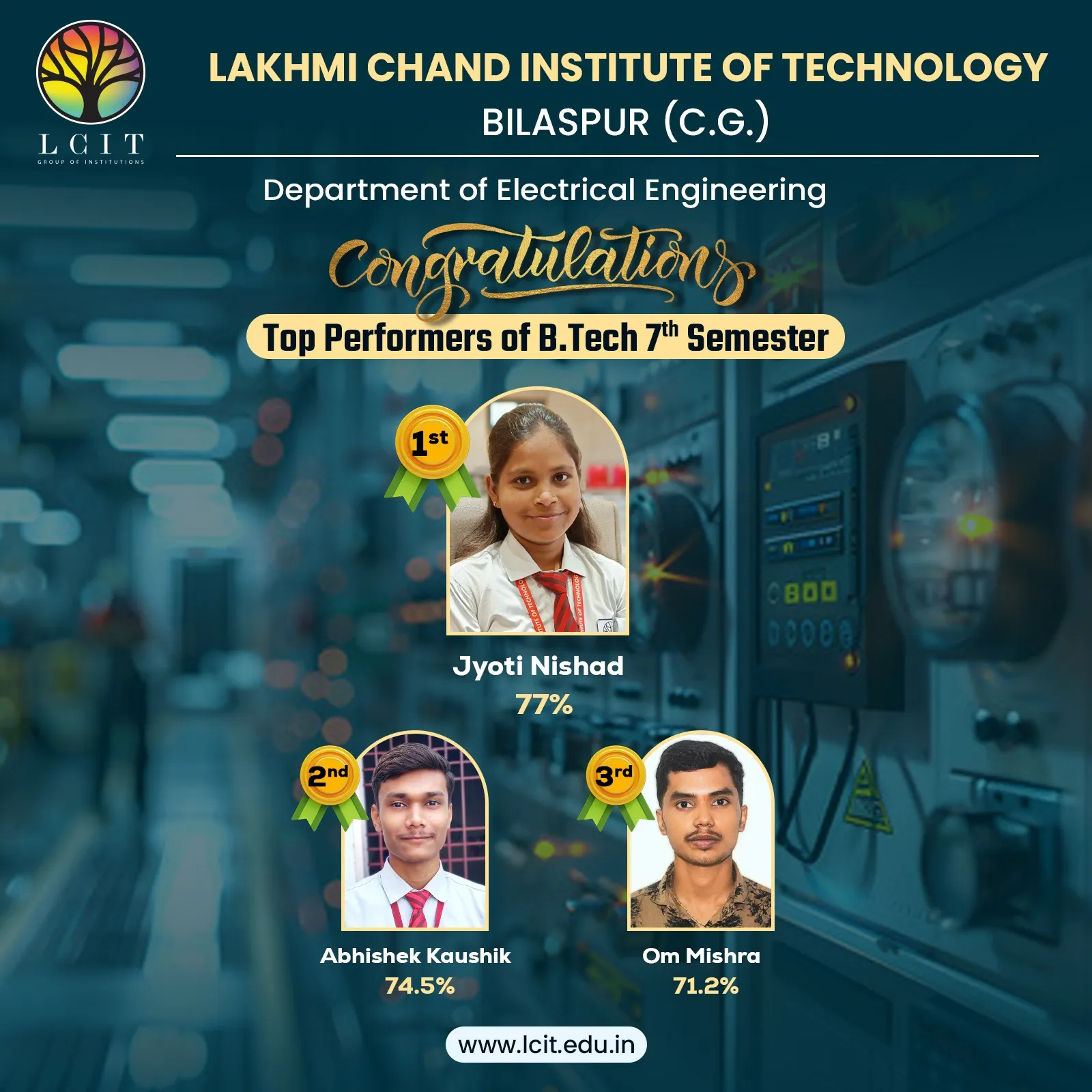
| 1 | Abhishek Kaushik | 2026 |
| 2 | Jyoti Nishad | 2026 |
| 3 | Om Mishra | 2026 |
| 4 | Himanshu Sahu | 2026 |
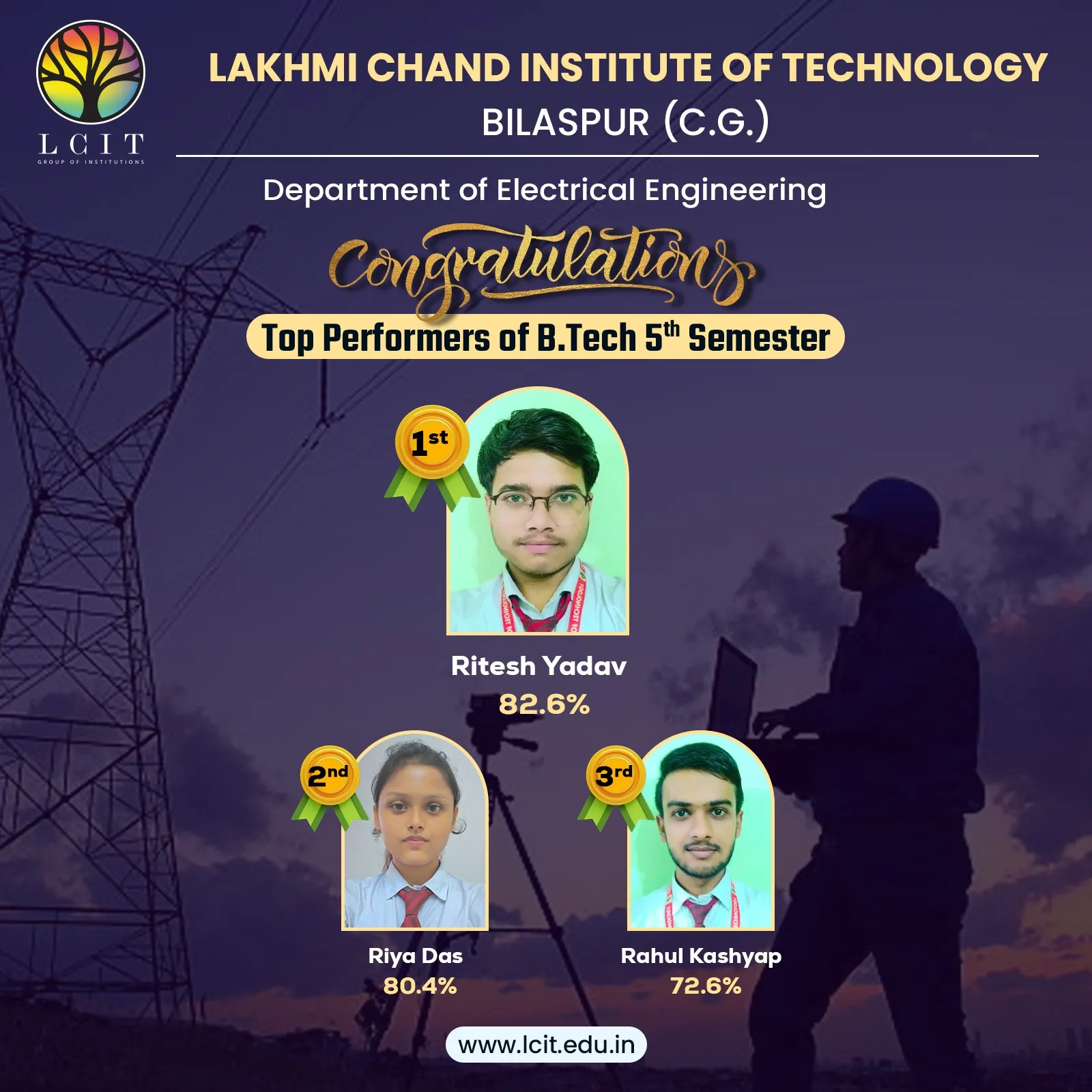
| 5 | Sahil Kesharwani | 2025 |
| 6 | Prakriti Singh Chandel | 2025 |
| 7 | Prerna Rajak | 2025 |
| 8 | Mikendra Kaushik | 2025 |
| 9 | Aman Kaushik | 2025 |
| 10 | Manisha Raila | 2024 |
| 11 | Krishna Raj Gautam | 2024 |
| 12 | Dheeraj Kumar | 2024 |
| 13 | Yogendra Kumar | 2024 |
| 14 | J Pravina | 2023 |
| 15 | Ayush Shrivas | 2023 |
| 16 | Naman Dewangan | 2023 |
| 17 | Kamendra Singh Dhruw | 2023 |
| 18 | Pankaj | 2023 |
| 19 | Ayush Yadav | 2022 |
| 20 | Swati Soni | 2022 |
| 21 | Srishti Gupta | 2022 |
| 22 | Ayush Mendekar | 2022 |
| 23 | Kamlesh Sahu | 2022 |
| S. No. | Year | Place Visited |
|---|---|---|
| 1 | 2025-26 | Adani Power Tilda, Raipur, Chhattisgarh |
| 2 | 2024-25 | BSNL Govt. of India Bilaspur, Chhattisgarh |
| 3 | 2024-25 | Sudha Bio Power Pvt. Ltd. Ratanpur Road, Bilaspur, Chhattisgarh |
| 4 | 2023-24 | Mahavir Coal Washery Pvt. Ltd. Belmundi, Bilaspur, Chhattisgarh |
| 5 | 2023-24 | PHIL Group Ghutku Pandripar, Bilaspur, Chhattisgarh |
| 6 | 2022-23 | Sudha Bio Power Pvt. Ltd. Ratanpur Road, Bilaspur, Chhattisgarh |
| 7 | 2022-23 | Power Gird Bharari, Ratanpur Road, Bilaspur, Chhattisgarh |
| 8 | 2021-22 | Chhattisgarh State Power Distribution & Corporation Limited, Bilaspur, Chhattisgarh |
| 9 | 2021-22 | Power Gird Bharari, Ratanpur Road, Bilaspur, Chhattisgarh |
| S. No. | Year | Activity |
|---|---|---|
| 1 | 2025-26 | One week refresher course on Electrical Power System |
| 2 | 2024-25 | One day workshop on IOT based Robotics Model |
| 3 | 2024-25 | One Day Session on Power Failure and Maintenance by Engineer Ms. Shilpa Jain |
| 4 | 2023-24 | One day workshop on Electric Motor Winding |
| 5 | 2023-24 | One day seminar on Electrical Power Supply and Distribution by Assistant Engineer Mrs. Anupama Mahto |
| 6 | 2022-23 | One week workshop on Electrical Hardware System |
| S. No. | Year | Course |
|---|---|---|
| 1 | 2026 | PLC, SCADA, and Industrial Automation |
| 2 | 2026 | MATLAB and Simulink for Electrical Systems |
| 3 | 2026 | Power System Simulation (using ETAP or digSILENT) |
| 4 | 2025 | Electric Vehicle (EV) Powertrain and Battery Management Systems |
| 5 | 2025 | Solar PV System Design and Integration (using PVSYST) |
| 6 | 2025 | Embedded Systems and IoT (Internet of Things) Applications |
| 7 | 2024 | Electrical CAD and Building Information Modeling (BIM) |
| 8 | 2024 | Power Electronics and Variable Frequency Drives (VFD) |
| 9 | 2024 | Smart Grid Technologies and Microgrid Design |